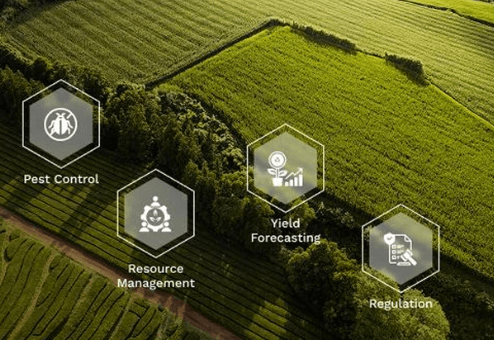
Smart Systems for Resource Management blends real-time sensing with analytics and autonomous control to optimize scarce assets. Data governance and interdependency mapping underpin transparent decision-making. Real-time streams enable modular monitoring and adaptive feedback loops, reducing ambiguity and speeding governance adjustments. Across energy, water, materials, and bandwidth, standardized workflows and proactive alerts support scalable, accountable optimization. The path from pilots to broad impact depends on measurable metrics and a clear road map, inviting further examination of implementation challenges.
What Smart Resource Management Is and Why It Matters
Smart Resource Management refers to the systematic allocation and supervision of scarce assets—such as energy, water, materials, and data—through integrated sensing, analytics, and control. This discipline analyzes interdependencies, aligns incentives, and enforces accountability. Data governance structures ensure integrity and compliance, while user empowerment enables informed choices. A disciplined approach supports resilient systems, transparent performance metrics, and scalable, freedom‑driven resource optimization across sectors.
Real-Time Data and Autonomy: Driving Clarity in Consumption
Real-time data streams enable autonomous decision-making by continually translating sensor inputs into actionable insights, thereby reducing ambiguity in usage patterns and enabling rapid adjustments.
The analysis emphasizes steady data integration, modular monitoring, and feedback loops to sustain transparency.
Real time data supports autonomy driven decision making, strengthening control, predictability, and improved resource allocation while preserving freedom through adaptive, disciplined system governance.
Use Cases Across Industries: Energy, Water, Materials, and Bandwidth
Across industries, the deployment of resource-management systems demonstrates distinct yet comparable use cases in energy, water, materials, and bandwidth. The analysis focuses on use cases, Energy management, Water efficiency, Resource optimization, Materials reuse, and Bandwidth prioritization. Systems-oriented processes reveal standardized workflows, cross-domain data integration, and scalable controls that enable autonomous tuning, proactive alerts, and shared metrics for freedom-oriented organizational resilience.
Measuring Impact and Building a Roadmap: From Pilots to Scale
How can organizations translate pilot outcomes into scalable, repeatable success? The approach analyzes metrics, controls, and feedback loops to quantify impact. Measuring impact becomes the backbone for a structured advancement, guiding decision gates and risk assessment. A deliberate building roadmap links pilot learnings to governance, funding, and standards, ensuring repeatable execution, alignment with objectives, and sustainable scaling across domains.
See also: newsming
Frequently Asked Questions
How Do Budgets Influence Smart Resource Decisions in Practice?
Budgets shape incentives and signaling that guide resource allocation decisions in practice; budget signaling balances supply and demand, driving disciplined spending, prioritization, and iterative adjustment within a systems framework to optimize overall resource performance and freedom through informed tradeoffs.
What Governance Structures Support Autonomous Resource Systems?
Lightning streaks through complexity as governance models establish autonomy boundaries for autonomous resource systems. They define oversight, accountability, and decision rights, enabling resilient operation. The process is iterative, analytic, and systems-focused, balancing freedom with responsible, structured control.
Which Metrics Best Predict Long-Term ROI for Deployments?
Predictive latency and data redundancy metrics best anticipate long-term ROI for deployments, with ROI benchmarks shaped by resource elasticity; the analysis emphasizes systematic, process-driven evaluation, balancing freedom-oriented aims against measurable, repeatable performance indicators and risk-adjusted projections.
How Are Data Privacy and Security Managed in Ecosystems?
Data privacy is governed through layered security management, risk assessments, and ongoing monitoring. Governance structures formalize roles, controls, and audits; data minimization and access restrictions reduce exposure while incident response plans ensure rapid containment and accountability in ecosystems.
What Roles Do Humans Play Alongside Automation and AI in Ops?
In a hypothetical plant, humans oversight shapes automation, ensuring safety and adaptability. This illustrates humans automation balance, where decision channels, ethics integration dynamics, and continuous feedback sustain resilient operations within evolving AI-driven systems.
Conclusion
Smart Resource Management systems reveal that data-driven autonomy clarifies demand, aligns incentives, and reveals interdependencies that hidden processes obscure. By formalizing governance, standardizing workflows, and embedding feedback loops, they transform pilots into scalable, resilient operations. The theory that real-time insight plus autonomous control yields efficient, equitable resource allocation holds when metrics, governance, and interoperability are systematically designed. In essence, disciplined, cross-domain orchestration converts complex flows into transparent, adaptable systems with measurable impact and sustainable scale.